Your commute is now a searchable record.
Plate-reader cameras like Flock's photograph every passing car and log the plate, the make, even the bumper stickers. In the US, police in other towns can often search it without a warrant. Similar systems are spreading in Canada.
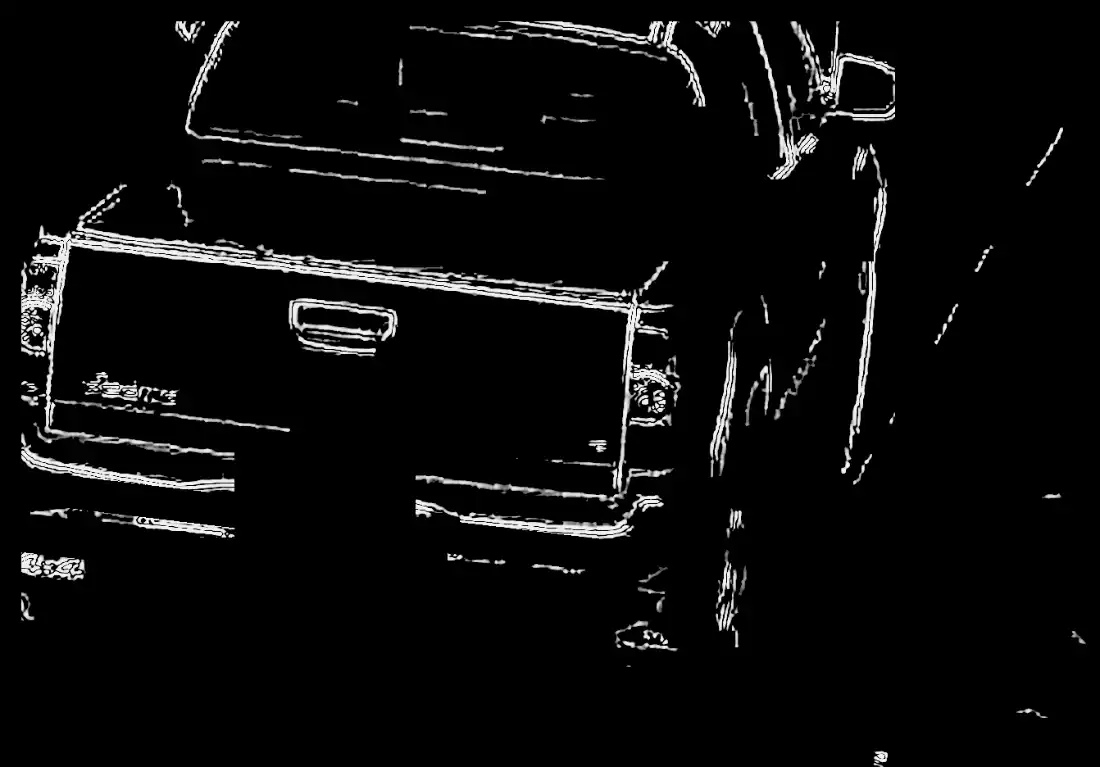
- Pickup
- Grey paint
- Toyota Tacoma
- Rear rack
- Window sticker
- 4x4 decal
- Plate
- ABC 1234 · read 94% · sample
- Seen
- Tue 08:41:22 · Oak St & 3rd · northbound
- Shared
- Searchable by partner agencies
- Kept
- Set by each agency; longer if exported
Stickers
Vinyl stickers for your car, laptop or water bottle. Ships to the US and Canada; checkout runs on Shopify and shows prices in your currency.
About stickers and cameras. Flock's search can match cars by their bumper stickers, so a sticker will not make your car harder to find. It does show your neighbors and your city council where you stand.
How plate-reader cameras work
Flock is the best-known maker. It sells solar-powered cameras to cities, police, HOAs and retailers across the US. Other vendors sell similar systems in both countries, mounted on poles, at intersections or on police cars. Each photographs passing vehicles and makes the results searchable.
- On the pole A camera photographs every car Plate, make, color, stickers, time, direction
- In the database Stored and searchable Each agency sets how long. Flock's default was 30 days; since August 2026 it is 7 for new police customers
- Who can search it Police, and often more Partner agencies, plus stores and HOAs that run their own cameras and choose to share
The camera does not wait for a suspect. It records every vehicle that passes, around the clock, whether or not anyone is under investigation.
Flock's vehicle search (sold as "Vehicle Fingerprint", now "Vehicle Signature") matches cars by make, color, type, and features like racks, decals and bumper stickers, even with no plate visible.
US agencies can opt into sharing so officers elsewhere can search local cameras. Your city's policy may not limit what another department does.
Why this is a privacy problem
A single photo of your car reveals little. Weeks of them can show where you live, work, worship, protest and see a doctor.
No warrant, no notice
No warrant is needed: officers pick a reason from a list and, under Flock's 2026 rules, add a case number. Before that, audit logs showed reasons like "idk". Nobody tells you your car was looked up.
Mission creep
Systems bought to find stolen cars have been searched for other purposes. In the US, that has included immigration enforcement and, in one reported Texas case, tracking a woman after a self-managed abortion.
Private networks, public data
Stores and HOAs can run Flock cameras too, and choose to share them with police. Home Depot and Lowe's have done so. Rules written for public agencies may not cover them.
Errors land on people
A misread plate or bad hotlist entry can mean a felony stop at gunpoint. In Aurora, Colorado, that meant a family held at gunpoint and a $1.9 million settlement.
Sources include 404 Media, EFF, ACLU, Capitol News Illinois, Flock's own documentation, and the privacy commissioners of British Columbia and Ontario. Links on the sources page.
In the US and in Canada
The cameras work the same way in both countries. Who runs them, the laws that apply and how you push back are different.
United States
- Who runs them
- Flock cameras operate in thousands of US communities, run by police, cities, HOAs and stores. Many agencies share searches across state lines.
- The law
- Mostly state law, and it varies widely. Illinois bars sharing with out-of-state police for immigration or abortion cases. A Washington court ruled Flock images public records in 2025; the legislature exempted them in 2026.
- Get the records
- File a public records request under your state's law. FOIA covers federal agencies only.
- Push back
- Flock contracts come up for renewal at city council. Several cities have paused or cancelled them.
Canada
- Who runs them
- As of November 2026 we found no public record of Flock contracts with Canadian police, but similar systems are spreading. Brampton, Ontario put Genetec plate readers at 50 intersections, chosen with Peel police, and Toronto police have readers on every patrol car.
- The law
- Privacy commissioners generally treat plate data as personal information. BC's commissioner found in 2012 that Victoria police were not authorized to share non-hit data with the RCMP, and Ontario's commissioner has issued guidance for police that covers how long it is kept.
- Get the records
- File an access to information (FOI) request under federal or provincial law for the contract, policy and audit logs.
- Push back
- Complain to your provincial or federal privacy commissioner, and raise new camera programs at council before they are approved.
What you can do
-
Find the cameras
Check the crowd-sourced map at deflock.org and add any you spot. Note who runs each one: police, the city, an HOA or a store.
-
Request the records
Ask for the contract, the sharing list and the search audit log. It costs little or nothing and the answers are often news.
Records request, US
Subject: Public records request: license plate reader (ALPR) records

To the records officer, [agency name]:

Under [your state's public records law], I request copies of:

1. Any contract, quote, invoice, renewal or amendment with Flock Safety
   or any other license plate reader vendor.
2. Your current policy for plate reader data, including how long it is
   kept and who it is shared with.
3. A list of agencies and organizations that can search your data, and
   of those whose data your staff can search.
4. Search audit logs for the last 90 days, showing the date, the user
   and the stated reason for each search.
5. Any reports on the program's use, hits and errors.

Electronic copies are fine. If you withhold anything, please cite the
exemption and release the rest. If fees will exceed $25, please tell
me first.

Thank you,
[name]
[email]
Access to information request, Canada
Subject: Access to information request: licence plate recognition

To the freedom of information coordinator, [municipality or police service]:

Under [the access law that applies: MFIPPA for Ontario cities and
municipal police, Ontario's FIPPA for the OPP, BC's FIPPA for BC
cities and police, or the federal Access to Information Act for the
RCMP], I request copies of:

1. Any contract or agreement with a licence plate recognition vendor
   (for example Genetec, Motorola Solutions or Flock Safety).
2. Any privacy impact assessment for the program.
3. The retention policy for plate data, including data on cars that
   were not on a watch list.
4. Any agreement to share plate data with other agencies, such as the
   RCMP, other police services or private companies.
5. Audit logs or reports on how the data has been searched.

I prefer electronic records. Please contact me if fees will apply.

Thank you,
[name]
[email]
-
Show up at council
Camera contracts and renewals go to a public vote. Several US cities have paused or cancelled contracts after residents spoke up. Two minutes at the microphone counts.
Two-minute public comment
My name is [name] and I live in [neighborhood]. I'm asking council
to [pause / not renew / not approve] the plate reader camera contract.

These cameras record every car that passes, not only suspects. Over
weeks, that becomes a searchable history of where residents go: to
work, to worship, to a clinic, to a protest.

Before any vote, please make public who can search this data, how
long it is kept, which outside agencies can reach it, and the audit
log of past searches.

If those answers aren't public, the contract shouldn't pass. Thank you.
-
Back legal limits
Support state or provincial rules that put limits on these systems. In Canada, privacy commissioners also take complaints. Rules worth asking for:
- Delete plates that match no investigation within days, not months.
- Require a warrant to search past locations.
- No sharing outside the state or province without a court order.
- Publish search audit logs and an annual report.
- Hold private camera networks to the same rules.
Many US states and Canadian provinces ban covers or anything that obscures a plate, and penalties vary. Do the legal things above instead; they work better.